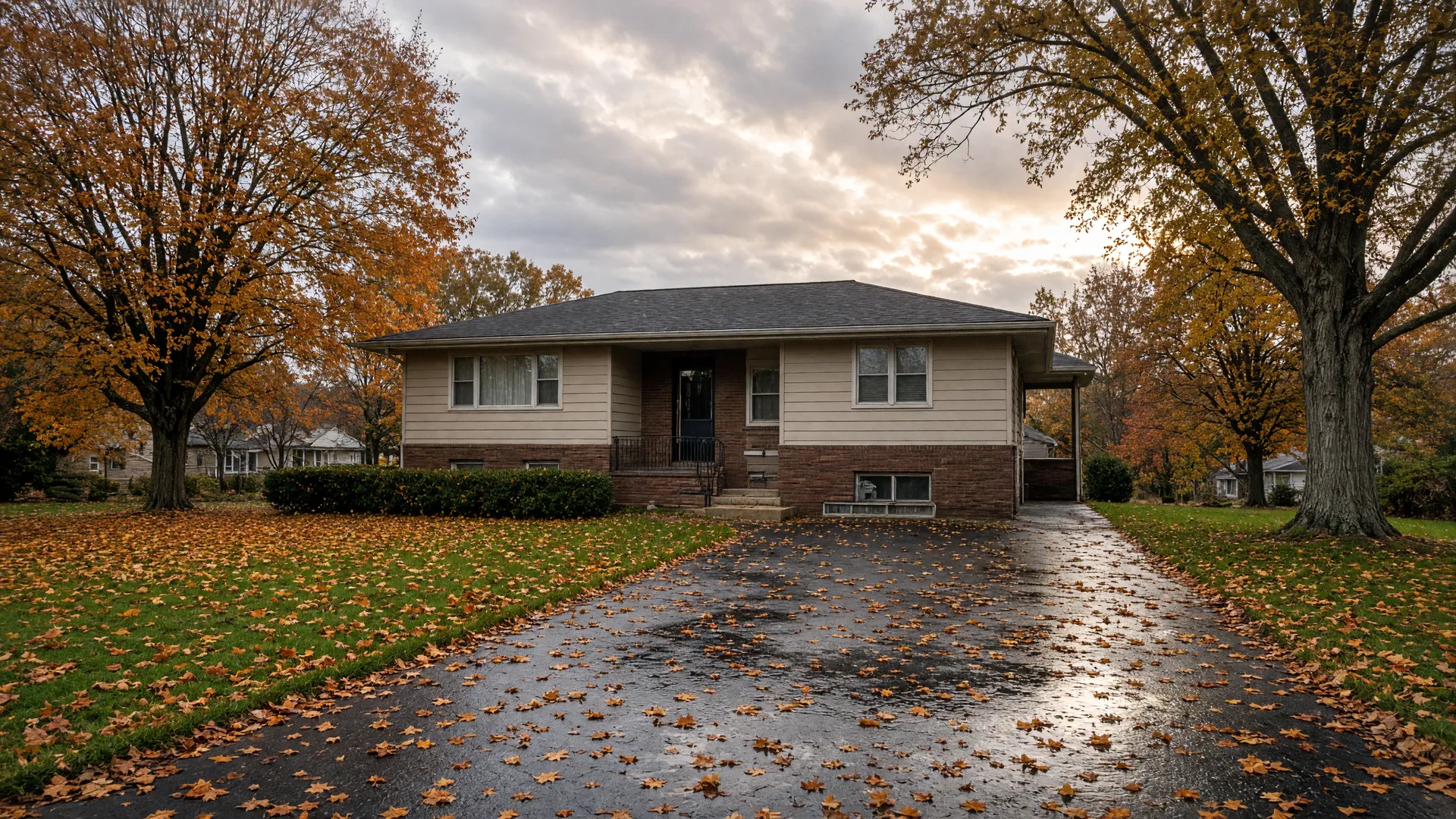
Basement flooding is one of the most expensive surprises a Cinnaminson homeowner can face, and in this township it is not rare. Roughly 22 percent of Cinnaminson's land area carries flood exposure, the groundwater table runs high in the sandy Coastal Plain soils beside the Delaware River, and thousands of post-war basements were built before modern drainage standards existed. The good news is that most basement flooding is preventable: a maintained sump pump, proper grading, clean gutters, and a short fall checklist stop the vast majority of wet-basement disasters before they start. Here is how water gets in, what to do about it, and what it costs in 2026.
Why do Cinnaminson basements flood?
The short answer is groundwater, not rivers. Cinnaminson sits on the New Jersey Coastal Plain, a region of sand, silt, and clay laid down over millions of years. Groundwater in that aquifer rises and falls with rainfall, and near the Delaware River the water table can sit surprisingly close to the surface. After a stretch of heavy rain, or during a fast spring melt, the water table climbs, and the weight of that water, what engineers call hydrostatic pressure, pushes it through the lowest points in a basement: the cove joint where the wall meets the floor, cracks in the walls, and up through the slab itself.
Cinnaminson's housing stock makes the problem worse. Much of the township was built during the post-war boom, with a median construction year around 1966 and roughly 17 percent of homes dating before 1950. Ranches and split-levels, the dominant styles here, were typically built with basements, and foundations from that era went in to older drainage standards, often cinder block with mortar joints that have spent six decades fighting freeze and thaw. Neighborhoods like Fountain Farms, Rolling Green, and Poets Walk are full of these homes. Not every house has a basement; some builders laid slabs instead, but if your house has one, it was built for a wetter reality than the builders planned for.
Local hazard planners agree the risk is real. Burlington County's hazard mitigation plan rates flooding a frequent, medium-impact hazard for the township, with roughly $195 million of general building stock sitting inside the 1 percent annual chance floodplain. And the town's geography explains why: the north end hugs the Delaware River, and the west edge follows Pennsauken Creek. Our neighborhood guide maps which sections sit closer to that water.
Is my Cinnaminson home in a flood zone?
That depends entirely on your address, and Cinnaminson is not uniform. The township's own climate vulnerability assessment maps most flood exposure to two corridors: the northern stretch along the Delaware River and the western edge along Pennsauken Creek, together covering about 22 percent of the township's land. If you live in the middle of town or east of Route 130, your exposure is much lower. If you are anywhere near the river, it is real.
FEMA's Flood Insurance Rate Maps tell you which side you are on. Homes inside Special Flood Hazard Areas, the 100-year floodplain mapped as A or AE zones, must carry flood insurance when there is a federally backed mortgage. Homes in Zone X, moderate to low risk, are not required to, though flood insurance is still available and worth a conversation for river-adjacent properties. Cinnaminson has participated in the National Flood Insurance Program since 1978, so the maps exist and are kept current. Look up your address on the FEMA Flood Map Service Center at msc.fema.gov rather than trusting a memory of what the map said years ago.
The Delaware River Basin Commission tracks exactly where high water shows up first: in Cinnaminson, flooding begins on river-adjacent streets like Zeisner Avenue and River Road, and high Delaware tides push up the lower reaches of Pompeston Creek. When the river surged toward one of its highest recorded levels during a January 2024 winter storm, riverside basements in the township learned that lesson the hard way. If you are shopping for a home, this is one of the first questions to ask about any property near the river, and our home safety checklist puts the flood-zone question in context with the rest of a home review.
What does a sump pump do, and do I need one?
A sump pump is the workhorse of a dry basement. Water that seeps through the cove joint, wall cracks, or a perimeter floor drain collects in a pit in the lowest part of the floor, and the pump kicks on when the water rises, pushing it through a discharge pipe out of the house and away from the foundation. Homes without a sump rely on gravity alone, and gravity is not enough once the water table climbs.
How do you know if you need one? Look for the quiet signals: white chalky efflorescence on the walls, a musty smell, damp patches along the wall-floor joint, water stains on stored boxes, or a pump that runs on every wet day. The cost of inaction is dramatic: FEMA estimates even an inch of standing water can cause around $25,000 of damage, and its flood fact sheet puts one inch in a 1,000-square-foot home at nearly $11,000, so five-figure damage is the average basement flood, not an exaggeration.
And do not overlook the power angle. The storms that flood basements are the same storms that knock out power, and industry estimates attribute roughly six in ten storm-related sump pump failures to outages. A battery backup keeps pumping through an outage and is the upgrade most New Jersey waterproofing contractors recommend first.
How do I test and maintain my sump pump before winter?
Test your pump at least twice a year: once in the fall before the wet season and again in early spring. The test takes two minutes. Slowly pour a five-gallon bucket of water into the pit, watch the pump turn on, and confirm it empties the pit and shuts off cleanly. A pump that hums but does not pump, cycles on and off, or runs continuously is telling you it is time for service or replacement.
While you are down there, do four quick checks. Clean the inlet screen at the base of the pump; silt is the pump's main enemy. Inspect the float switch, the most common failure point, and some manufacturers recommend replacing it every two years. Jiggle the check valve to make sure it is not stuck, so water does not pour backward into the pit between cycles. And confirm the discharge line is clear from pit to exit, with the outside end running a few feet from the foundation and draining onto an absorbent surface instead of pooling against the house.
Winter adds one more job. If the discharge line freezes, the pump has nowhere to push the water and the pit fills. Keep snow away from the discharge point, make sure the line has a downward run so it drains after every cycle, and after a thaw pour a bucket through to confirm flow. Sump pumps typically last 7 to 10 years, and most guides suggest replacing the pump outright at the 10-year mark even if it still runs. Pair this routine with the exterior prep in our frozen pipes prevention guide, and your basement is covered on both sides of the wall.
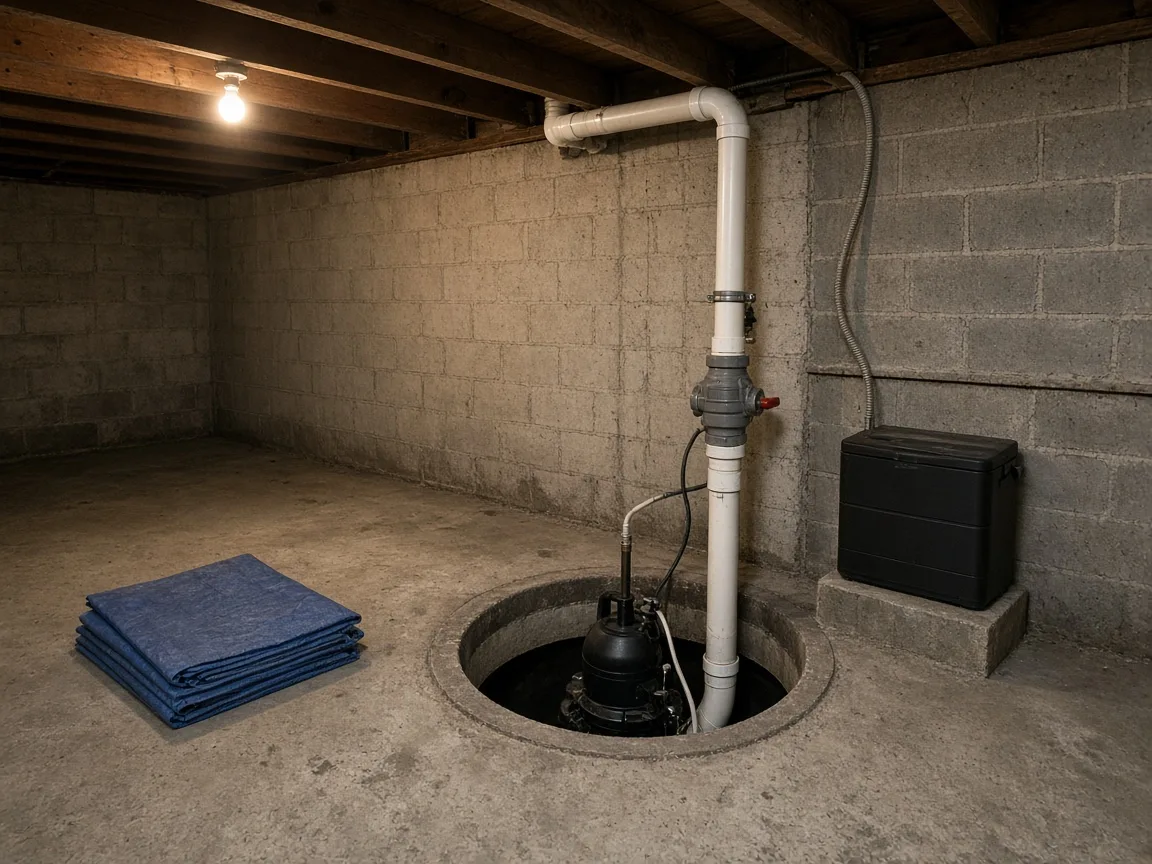
Pour a five-gallon bucket into the pit twice a year and watch the pump cycle. A battery backup on the wall means the pump keeps working when the power does not.
How much does a sump pump replacement cost in 2026?
A replacement costs far less than the damage it prevents. A like-for-like swap in an existing pit typically runs $650 to $1,200 installed, and national home services report the full range from about $645 to $2,120, averaging near $1,360. Adding a pump where none exists, with a new pit, liner, and discharge line, runs $1,200 to $3,000 or more depending on the concrete work. A battery backup adds roughly $600 to $1,200 installed, and the backup battery itself is typically replaced every 3 to 5 years.
Supplies are close by. Harbor Freight at 2501 US-130 sits right in Cinnaminson for basic pumps and parts, and Home Depot at 9000 US-130 and Lowe's at 1331 Fairview Blvd, both in Delran, cover bigger runs. For wiring, discharge work, or a full installation, a licensed plumber or waterproofing contractor is worth the cost. Put the numbers in context with our home maintenance budget guide, which lays out the full annual upkeep picture for a Cinnaminson home.
What else keeps water out of a Cinnaminson basement?
A pump handles water that is already inside, but the cheapest fixes keep it out in the first place, and most are fall chores. Walk the perimeter after a heavy rain and make sure the soil slopes away from the foundation for at least the first six feet; low spots that pond against the house are an open invitation. Keep gutters and downspouts clean, and extend downspout outlets a few feet from the foundation so roof water does not dump straight into the soil beside the basement wall. Clear window wells of leaves and debris, and make sure each well drains instead of filling like a bathtub.
For homes with recurring seepage, the standard permanent fix is an interior drainage system: a French drain channel along the wall-floor joint, routed to a new or existing sump pit. Contractors commonly quote these systems at $40 to $85 per linear foot, with typical installations landing between $3,000 and $8,000, and they stop the water at the point where it actually enters. Exterior waterproofing, which excavates the foundation and installs footing drains, is the most expensive route, usually reserved for the worst cases, and it deserves a second opinion before you commit.
Where can my sump pump discharge water in New Jersey?
This is the question that starts neighbor disputes, so get it right. New Jersey law and almost every municipal code prohibit connecting a sump pump, roof drain, or foundation drain to the sanitary sewer; the sewer system is sized for wastewater, not stormwater, and illegal connections cause overflows and costly treatment. Discharging across your property line onto a neighbor's yard is also not allowed. The right answer is to handle the water on your own property: drain onto an absorbent area of your yard, into a dry well, or to the street and storm drain where your town permits, keeping the discharge point a reasonable distance from the property line to stay neighborly.
Basement flooding in Cinnaminson: Your questions, answered
Why do Cinnaminson basements flood?
Most flooding comes from groundwater, not rivers. The water table near the Delaware can sit close to the surface, and after heavy rain or snowmelt, hydrostatic pressure pushes water through the cove joint where the wall meets the floor, through wall cracks, and up through the slab. Post-war foundations built to older standards are the most vulnerable.
Is my Cinnaminson home in a flood zone?
It depends on the address. Flood exposure concentrates along the Delaware River in the north and Pennsauken Creek in the west, covering roughly 22 percent of the township. Check your address on the FEMA Flood Map Service Center at msc.fema.gov. Homes in Special Flood Hazard Areas need flood insurance with a federally backed mortgage; Zone X homes do not.
How often should I test my sump pump?
At least twice a year: once in the fall before the wet season and again in early spring. Pour a five-gallon bucket of water into the pit and confirm the pump turns on, empties the pit, and shuts off cleanly. Quarterly testing is even better, and the test takes about two minutes.
How much does a sump pump replacement cost?
A like-for-like replacement in an existing pit typically runs $650 to $1,200 installed, with a national range of about $645 to $2,120 averaging near $1,360. A new installation with a new pit runs $1,200 to $3,000 or more, and a battery backup adds about $600 to $1,200.
Do I need a battery backup sump pump?
For most Cinnaminson homes, yes. The storms that flood basements are the same storms that knock out power, and industry estimates put about six in ten storm-related sump failures at power outages. A battery backup costs $600 to $1,200 installed, and the backup battery is typically replaced every 3 to 5 years.
Can a sump pump drain into the sanitary sewer in New Jersey?
No. State rules and most local ordinances prohibit connecting a sump pump, roof drain, or foundation drain to the sanitary sewer, and discharging onto a neighbor's property is not allowed either. Use an absorbent area of your own yard, a dry well, or the street and storm drain where your town permits.
How much does basement waterproofing cost?
An interior drainage system, a French drain channel along the wall-floor joint routed to a sump pit, is the standard fix for recurring seepage. Contractors commonly quote these at $40 to $85 per linear foot, with typical installations landing between $3,000 and $8,000.
A neighborly reminder
I have spent years walking homes across this township, from the river-adjacent streets off Zeisner Avenue to the post-war ranches deeper in town, and I have never seen a wet basement that was cheaper than the prevention. Test your pump before the next nor'easter, walk your grading in the daylight, and if you are shopping for a home, ask about the basement before you fall in love with the kitchen. If you would like a second set of eyes on a property's water history, or just want to talk neighborhoods over coffee, I am here.
Have questions about Cinnaminson? Contact Bob Millaway at 856.426.1522
Contact Bob